
Travel
Most People Don’t Like Change…I Crave It.
|
I subscribe to a weekly newsletter from an expatriot who’s living life powerfully. He sent me this story to rimind me how important it is to keep fluid and go with the flow. Most people loath change but I’ve embraced change so much that now I crave it. I get complete satisfaction and fulfillment from keeping things fresh and pushing my comfort levels by learning new things and changing things up often.
I owe this way of being to my ongoing financial success. I was heavily into real estate and when that industry took a downward spiral, I shifted to a completely different occupation in internet advertising. If I would have resisted, and stayed in the real estate market I would have been dragged down with it. Instead, things are going well despite the big economic downturn most people are facing right now. In order to be successful and powerful, I think it’s imparative that you get really comfortable with change yourself. The following story is a good example of why it’s so important.
By the late summer of 1939, Hitler’s forces had absorbed Austria and Czechoslovakia into his growing empire, and Germany’s military was massed at the Polish border clearly preparing for invasion.
In an astonishing display of perhaps the greatest complacency in the history of the modern world, however, Polish people sat lazing about their lakes, beaches, and riverbanks worrying about more pressing matters– like how to beat the summer heat. In September of that year, German troops easily vanquished the Polish army, and Krakow became the colonial seat of the occupying forces. Almost immediately, under the direction of the German SS, anyone who posed a threat was rounded up and imprisoned. This included over 180 Polish university professors and many businessmen. Krakow, of course, is also very close to two of the main concentration camps used during the German occupation, nearby Oswiecim (Auschwitz) and Plaszow. The worst part is that, even after the war was over, Poland merely swapped fascism for Stalinism. Overall, the country was shrouded in brutal totalitarian control for half a century; undoubtedly, the Nazi invasion of Poland set off a chain of events that would forever affect the lives of all Poles. It’s true that no one had a crystal ball back then… but it would certainly stand to reason that with Hitler knocking at your door, you would probably want to have an escape plan. Even more prudently, perhaps to have already executed it. Many Poles did just that; they spent the preceding seasons liquidating assets, stocking up on gold, and getting their travel documents in order. By the time Hitler came to town, many of the smart ones were already gone. My guess is that the ones who left were probably ridiculed by their peers as “crazy”, or “fringe”, or “out of touch”, or my personal favorite, “unpatriotic.” It’s as if they had a solemn national duty to stay, get roped up and waste away in a concentration camp for the ‘greater good’ of Poland. For those who escaped before the war, many of them went on to build new lives in places like the United States, Brazil, and Argentina. They prioritized freedom and opportunity, and they went to the best places that were safest for themselves and their families. I’ve met a businessman here (I’ll call him “Jarek”) who I think has the best story to sum this up; when Jarek’s father was just a boy in Krakow, the family saw the warning signs and decided to leave town. This was 1938. Jarek’s grandfather owned a successful bakery at the time, yet he felt that he would rather start over somewhere else than risk the safety of his family by living in a police state. They sold everything– the house, livestock, and business… and everyone else thought they were crazy. Within six months, the family was in Curitiba, Brazil; Jarek’s grandfather soon established a new bakery that eventually became a thriving business. Jarek’s father grew up in Curitiba and integrated into the local culture, yet he maintained his roots since there were many other Poles who followed them there. 30-years later, the face of Brazil started to change. By the mid-1960s, the whole of Latin America was becoming a military dictatorship. Once again, the family decided to get out while they could and head towards better opportunity; they sold the business, liquidated their assets, and this time headed towards the United States. Jarek was just a baby when the family made this move. He grew up in a Polish neighborhood of Chicago, spoke Polish at home, and married a Polish girl from his neighborhood. He was working as a young real estate professional in the Chicago suburbs when the Berlin Wall fell, at which point he began making more frequent trips to Poland to visit his family’s homeland. In his subsequent trips throughout the following years, Jarek began feeling like there was more and more opportunity in Poland; in 2003, fearful of what would happen in Chicago because of the “War on Terror,” Jarek moved his family full-circle back to Poland because he felt like it was the safest, most opportunity-rich place for him to be. He may have been right; his business is booming, and the family really enjoys the life they have built for themselves here. To listen to him talk, though, they would happily leave and go somewhere else if the right circumstances were presented. “My most important obligation is to my family,” he told me. “I will go wherever I can provide the best life for them, whether that is Poland, America, Brazil, or anywhere else. Nothing lasts forever, you have to expect that these things will change from time to time. People have to learn to change as well, to not get rooted in ideology.” I think Jarek has an interesting point; I’d really like to hear from you, though, what do you think? |
Reporting From: Paris, FR
While I have been living in Paris for the last month or so, the city is buzzing slightly (less than usual) about World Cup football.
I’m not a huge fan of the sport, but my husband is, and as an amateur athlete I appreciate the excitement and spectacle of international competition, particularly one that draws billions of eyeballs. Being in Germany for the 2006 World Cup was definitely an amazing experience, as was watching the UK’s draw over the weekend.
In case you haven’t seen the games, one of the things that has been so interesting about this particular World Cup is how most of the European teams which usually dominate the FIFA world rankings– Italy, Spain, Portugal, France, UK, Greece, etc.– have really been struggling on the field.
Ironically, these are also the same countries struggling with disastrous balance sheets and bloated entitlement programs.
At the same time, young upstart teams like Paraguay, South Korea, New Zealand, and Uruguay have proven themselves to be extremely effective against these legendary, once-dominant opponents of Old Europe.
I feel like this sports metaphor, which is being consistently played out on the field during the World Cup tournament, represents the changing of the guard that is taking place in global economics and geopolitics– the rise of the developing nation, and the decline of the developed.
If you’d indulge me a bit more leeway with the sports metaphor, one could argue that this tournament’s lackluster teams of old Europe are well-endowed with enormous assets– great players, goodwill, training programs.
Just like governments which rely on the same tax and spend playbook year after year, Europe’s great football teams are being rendered ineffective by sticking to the same old tired tactics of the past.
The more effective teams from developing nations, however, are experimenting with innovative approaches, such as extreme conditioning regimens, or Chile’s unique 3-3-1-3 formation, and even North Korea’s massed defense approach.
Overall, the results are clear, both on and off the field.
Here in Paris, where the national team has been suffering from anemic performance thus far, the population is simultaneous gripped with a severe economic crisis. With a new political party at the helm, England and France’s leadership is now tasked with the mission of doing *something* to stem the crisis.
Needless to say, this will unfortunately rely on the old, ineffective playbook of drastically higher taxes. The government has already announced increasing capital gains tax from 18% to 40%, and yet another VAT increase from 17.5% to 20% is also expected. Sound familiar?
By comparison, South Korea charges a 0.3% tax on capital gains for small investors, and 11% in other instances. In Paraguay, the rate is 10%, as is the income tax rate. (in Singapore, UAE, Labuan, and Hong Kong, there is no capital gains tax at all)
Tomorrow, the UK’s new Chancellor of Exchequer, George Osborne, will unveil the kingdom’s “emergency budget,” which should provide more details on the tax increases. The government has been vocal about its intention to curb spending, though most cuts are paltry line items like a $6 million swim program for kids.
How about taking a look at the millions upon millions of government workers who add no value to vital production in the economy? With their bright reflective vests, they’re ubiquitous in England, yet they have less authority, responsibility, and productive value than your average high school hall monitor.
It’s difficult (but possible) to fathom a greater waste of taxpayer money.
I would suggest that for countries like the UK, both their politicians and football coaches should take a few pages from the playbooks smaller, developing countries.
Until next time…
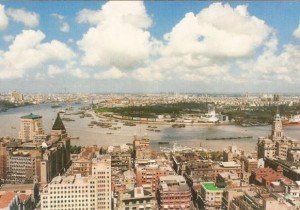
This is why China may kick everyone’s ass…..
This is Shanghai in 1990 vs 2010. Only a 20 year difference!
The ballet I saw in Paris last time I was there.
I’ve included a youtube clip below that can’t do justice to the event, but such beauty is hard to ignore even in a tiny video player.